
Cooperative
Futures
Institute
Cooperative
Futures
Institute
What we do
The Cooperative Futures Institute is anchored at Arizona State University, where we conduct research on the fundamental principles of cooperation and their applications, including building technology and institutional infrastructure systems that are truly mutually beneficial. By grounding human–technology design in the same dynamics that sustain cooperation in living systems, we build tools that support human flourishing.

Cooperation as a Central Design Principle
Technology development that holds cooperation as a central design principle, creating benchmarks for AI cooperation and building new AI tools like America AI to help individuals and communities achieve mutually benefical outcomes.

Redesigning Insurance & Risk Management
Tools and products that help individuals and communities manage risk and help insurers adapt to an evolving landscape of uncertainty, like My Risk Dashboard.

Cooperation Benchmark
We are building a Cooperation Benchmark to evaluate AIs on their capacities as cooperative partners and friends.

Simulation & Game-Based Learning
Interactive experiences that make cooperation tangible, from tabletop and digital games to immersive disaster scenarios.

Cooperative Infrastructure & Institutional Design
In our pilot year, we’re partnering with Arizona energy companies, municipalities, and disaster preparedness agencies to co-design and test cooperative solutions.

Community Engagement & Events
Workshops and interactive activities in everyday spaces - from bodegas to festivals - to build resilience and trust at the grassroots level.
Cooperative Futures Academy
The Future of AI-Human Interaction
Special thanks to our inaugural academy sponsor, Learning Layer Labs
June 1-4, 2026, San Francisco
Overview
The Cooperative Futures Institute Summer Academy on The Future of Human-AI Interaction is a four-day intensive that applies cooperation science and evolutionary theory to intelligence, health, AI alignment, and system design. Each day combines expert talks with interactive sessions and student research presentations, culminating in a hands-on AI Cooperation Benchmarks Workshop and "The Digital Cambrian" evening event in collaboration with Frontier Tower. The Summer Academy is hosted by Centrl Office.

Professors
Athena Aktipis, PhD. Director of the Cooperative Futures Institute, expert in cooperation across systems.
Geoffrey Miller, PhD. Associate Professor of Psychology at the University of New Mexico, studying evolutionary psychology, sexual selection, and AI alignment.
Jaimie Krems, PhD. Associate Professor of Psychology at UCLA, studying friendship, women's sociality, and the evolutionary roots of stigma.
Joshua Loughman, MEng. Principal Data Scientist at ASU's Decision Theatre studying complex systems, foresight, and AI for sociotechnical decision making.
Summer Mengelkoch, PhD. Postdoctoral Research Fellow at UCLA's Lab for Stress Assessment and Research, studying stress, inflammation, and the biological underpinnings of health and resilience.
James Tamplin, Founder. Founder of Kradle AI, specializing in testing and evaluating frontier AI models in rich 3D environments to surfacr their capabilities.
Michael Simeone, PhD. Research Associate Professor at ASU studying digitally-networked systems, epistemic environments, and AI interpretability.
Barbara Timm Brock, MS. CEO of eTrack Tech Inc. specializing in transformative problem-solving, aligning teams, and building high-performing cultures.
Dave Kammeyer, CEO. Software engineer and CEO for Mentality.ai, focusing on building and scaling advanced software systems.
Emmett Shear, CEO. American internet entrepreneur, investor, and CEO of Softmax, focusing on AI alignment.
Special thanks to our inaugural academy sponsor, Learning Layer Labs

Industry Partners
Centrl Office. A flexible workspace and community for AI startups and high-growth teams.
Frontier Tower. A 16-floor vertical village for frontier tech communities.
Learning Layer Labs. Frontier Tower-affiliated lab building tools at the intersection of learning and AI
Kradle.ai. A 3D platform built to evaluate frontier AI models and their behavior in dynamic environments.

Schedule
Monday, June 1. Evolution, Cooperation, and Intelligence. How evolutionary science and complexity theory illuminate the deep structure of cooperation, intelligence, and knowledge.
Tuesday, June 2. Health, Cooperation and AI. Cooperation as a multi-scale lens on human health, from cellular communities to public health systems.
Wednesday, June 3. Measuring Cooperation and Alignment in AI Systems. Applying cooperation science to AI alignment through fitness interdependence, civic applications, and hands-on benchmarking.
Thursday, June 4. Designing for Cooperation. Cooperation as an engineering and design problem, translated into testable artifacts through the AI Benchmarks Workshop.

Ticketed Evening Event: The Digital Cambrian
Wednesday, June 3, 6:30-9:00pm
Join the Cooperative Futures Institute and Frontier Tower for an evening event featuring 15 minute talks by professors and thought leaders on the future of human-AI interaction and co-evolution, followed by a salon style discussion and hosted dinner. Students in the academy recieve a free ticket.

Apply now
Apply to be in the inaugural class of the Cooperative Futures Institute Summer Academy!
Registration fee for the academy is $195, covering 4 days of instruction, materials, a ticket for the evening event at Frontier Tower, and food/beverage during instruction times. Steeply discounted lodging is available with our partner, the Superhero Hotel for $84/night. A limited number of need-based grants are available for students to cover travel and lodging expenses.
Application deadline is May 10th. Students will be informed of acceptance by May 15th.
Events
The Cooperative Futures Institute convenes leaders from academia, industry, and government to design and prototype cooperative systems for resilient futures. Our workshops, design sprints, and festivals translate cooperation science into practical frameworks for technology, infrastructure, and community innovation.
December 5, 2025; 12pm-6pm
Scottsdale, Arizona

In collaboration with reState and Supersymmetry Institute
January, 21, 2026
Davos World Economic Forum, Heimat Museum

In collaboration with AI Commons and Project Interdependence
January, 22, 2026
Davos World Economic Forum, Wisdom House
A Knowledge Exchange with The Global Futures Lab, Energy Forward, and NSF Futures Engine in the Southwest
CFI Executive Director, Athena Aktipis, is moderator of the Community Perspectives Panel
February 11, 2026
Arizona State University, Walton Center for Planetary Health | Auditorium 107

NEARCON 2026
NEARCON 2026 is the convergence point for innovations across the AI economy. Join Athena Aktipis, featured speaker for
The Parasite's Playbook: Five Mechanisms That Break Cooperation (And How to Defend Against Them)
February 23-24, 2026
San Francisco, California

Digital Commons in Theory and Practice: Wikipedia As An Exemplar of Adversarial Cooperation
Moderated by CFI Executive Director Athena Aktipis & Samuel J Klein, co-Founder of Public AI
Invitation only
March 2, 2026, 9:00am-1:15pm
Arizona State University

Building Digital Trust: What Wikipedia Teaches Us About Cooperation
A Cooperative Futures Salon Featuring Samuel J Klein, co-Founder of Public AI
With music by Katie Mae
Open to the public
March 2, 2026, 5:30pm-7:00pm
Dark Side, 805 S Farmer Ave
Tempe, Arizona

Funding the Commons @ Frontier Tower
Join CFI for a 16-floor vertical festival throughout the newly inhabited Frontier Tower: part conference, part hackathon, part music and arts festival, all focused on co-designing the coordination infrastructure for a future that promotes human flourishing. CFI will be hosting The Apocalypse Museum on the AI floor throughout the event and you can find CFI Director, Athena Aktipis, at the following events:
Saturday March 14
2:30pm Panel: Commons Governance Co-Design Lab: Workshopping Collective Coordination Structures for Frontier Tower
3:30pm The Ecomimetic Governance Gameshow: Governing the Commons?! Coordination Without Control
Sunday, March 15
3:50pm Keynote: From Multicellularity to Multi-Agent AI: Evolution’s Lessons for Scaling Cooperation
San Francisco, California
Workshop on Benchmarks for 3D Multi-Agent AI
This workshop is supported by the NSF (Grant No. 2319438), and in collaboration with KradleAI.
April 13, 2026
Tempa, Arizona (Arizona State University)
AI Meets Minecraft: From Blocks to Bots
A Cooperative Futures Salon Featuring James Tamplin and Florian Ernst (KradleAI)
With music by Katie Mae
Open to the public
April 13, 2026, 5:30pm-7:00pm
Dark Side, 805 S Farmer Ave
Tempe, Arizona

Workshop on Managing Risks of AI & Social Interaction/Friendship Benchmarks
This workshop is supported by the NSF (Grant No. 2319438).
April 17-18, 2026
Tempa, Arizona (Arizona State University)
Human + Tech Week
Join CFI for a special event during Human-Tech week
Cooperation+AI: Designing Collective Intelligence That Holds
May 11-15, 2026
San Francisco, California

Leveraging Human-Tech Cooperation for the Evolutionary Management of Cancer
In collaboration with the International Society for Evolution, Ecology and Cancer
May 21-24, 2026
Hersonissos, Crete, Greece
AI & Cooperation Design Sprint

Cooperative Futures Academy
In partnership with Centrl Office San Francisco; Frontier Tower
June 1-4, 2026
San Francisco, California
Leadership
The CFI leadership team brings decades of experience studying and practicing cooperation-and a proven ability to work effectively together. Through projects such as The Human Generosity Project, Cooperation Science Network, and Cooperation in the Apocalypse Project, they have built a foundation of collaborative research and innovation that now powers the Cooperative Futures Institute.

Athena Aktipis PhD
Executive Director
Associate Professor in the Department of Psychology, Director of the Interdisciplinary Cooperation Initative at ASU, and author of The Cheating Cell and A Field Guide to the Apocalypse. Aktipis studies cooperation, conflict, and decision-making across systems. As the founding director of CFI, she draws on decades of research in cooperation science and a career devoted to public engagement, from creating the Zombified Podcast and The Apocalypse Roadshow to writing books and articles that bring cooperation science to wider audiences.

Rob Brooks PhD
Director of Global Engagement
Scientia Professor of Evolution at UNSW Sydney. Brooks studies the tensions between conflict and cooperation in social living and sexual reproduction. He also studies how modern technologies engage with evolved human behaviours. His latest book, Artificial Intimacy, considers what happens when technology collides with evolved capacities to form friendships, become intimate, and cooperate. He is the recipient of the Eureka Prize and the Queensland Literary Award for Sex, Genes and Rock ‘n’ Roll.
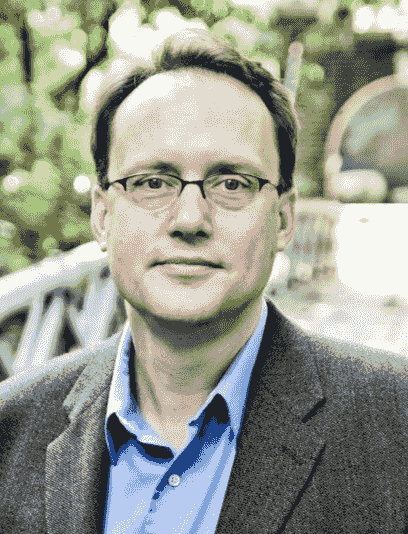
Lee Cronk PhD
Director of Education & Academic Partnerships
Distinguished Professor of Anthropology at Rutgers University and author of Meeting at Grand Central: Understanding the Social and Evolutionary Roots of Cooperation. Cronk studies cooperation and cultural evolution, with a focus on how people share resources and solve collective problems. He has pinoeered interactive teaching tools and curriculum for cooperation science education. At CFI, he leads efforts to expand education, training, and academic collaborations in cooperation science.
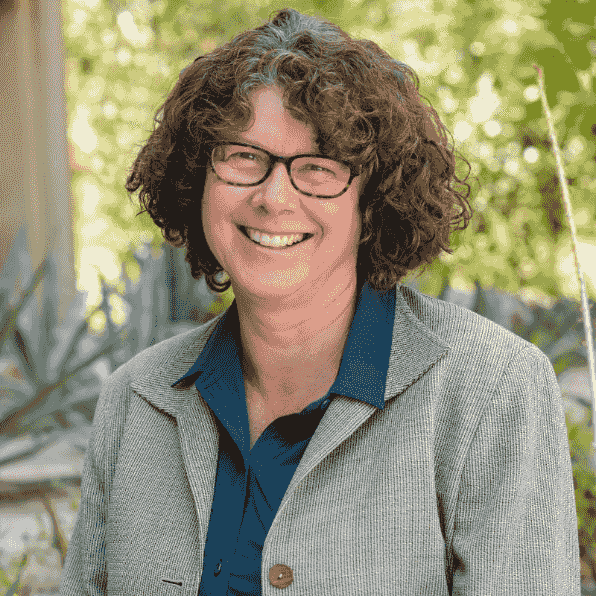
Jennifer Fewell PhD
Director of Biological Systems
President's Professor in the School of Life Sciences at Arizona State University. Fewell studies how social interactions and selection influence cooperative behavior and the role of self-organization in the transition to group living. She is an expert on biological complex systems, specializing on decentralized cooperation and division of labor, particularly how division of work emerges and scales within social groups, from harvester ants to other species.

Barbara Timm-Brock
Executive in Residence,
Cooperative Futures Venture Studio
Past Section Head of America’s Seed Fund at the U.S. National Science Foundation and a multi-industry C-suite executive and entrepreneur. At CFI, Timm-Brock works with founders and leadership teams to advance growth, strengthen venture readiness, and shape the institute’s emerging venture platform.

Peter M. Todd PhD
Director of Human–Technology Systems
Provost Professor of Psychological and Brain Sciences at Indiana University, Fellow of the American Association for the Advancement of Science (AAAS) and author of Simple Heuristics that Make Us Smart and Ecological Rationality: Intelligence in the World. Todd studies cooperation, decision-making, and how people think about the future, guiding CFI’s work on building adaptive, cooperative human–technology systems.

Polly Wiessner PhD
Director of Intergenerational Transmission & Cultural Systems
Distinguished Professor of Anthropology at The University of Utah and Arizona State University. She is a member of The National Academy of Sciences. Weissner has studied the role of technology in social and cultural change in small-scale societies, from the role of firelight to social media. She founded the Tradition and Transition Centre in Papua New Guinea to preserve and transmit Enga culture to the next generation.
Board
The Board of Directors works in close partnership with the CFI leadership team, providing strategic insight, governance, and external perspective. Their experience across research, technology, and cooperative systems strengthens CFI’s ability to translate ideas into long-term impact.

Christine L. Peterson
Christine Peterson is Cofounder and Senior Fellow of Foresight Institute. She is co-author of Unbounding the Future: the Nanotechnology Revolution; Leaping the Abyss: Putting Group Genius to Work; and Gaming the Future: Technologies for Intelligent Voluntary Cooperation. She coined the term ‘open source software’. She holds a bachelor’s degree in chemistry from MIT.
Andrew Maynard PhD
Andrew Maynard is a scientist, writer, and Professor at Arizona State University, where he directs the Future of Being Human initiative. With a background in physics, public health, and technology policy, he bridges disciplines to explore how innovation can serve society more effectively. Andrew is the author of Films from the Future and Future Rising, a Fellow of the American Association for the Advancement of Science, and a passionate advocate for making knowledge accessible to all.

David Sloan Wilson PhD
David Sloan Wilson is president of ProSocial World and SUNY Distinguished Professor Emeritus of Biology and Anthropology at Binghamton University. He applies evolutionary theory to all aspects of humanity in addition to the rest of life, through ProSocial World and in his own research and writing. His most recent books include his first novel, Atlas Hugged: The Autobiography of John Galt III, and a memoir, A Life Informed by Evolution.

Adam Julian Goldstein
Adam is the Co-founder, Chairman, and Head of Research for Softmax, a technology company focused on utilizing principles of organic alignment from evolutionary biology to solve problems of alignment in technological systems. Previously, he co-founded Hipmunk and was a visiting Scientist working on cancer research at the Levin Lab at Tufts. He holds bachelors degrees in Mechanical Engineering and Electrical Engineering and Computer Science from MIT.

Gary Dirks PhD
Gary Dirks is senior director, Global Futures Laboratory, and director of LightWorks®, an Arizona State University initiative that capitalizes on ASU's strengths in solar energy and other light-inspired research. He is also the Julie Wrigley Chair of Sustainable Practices, professor of practice in the School of Sustainability, and distinguished sustainability scientist. From 2013-2019, he was the director of ASU's Wrigley Institute. Before joining ASU, Professor Dirks was the president of British Petroleum Asia-Pacific and the president of British Petroleum China.

Nichol Bradford
Nichol Bradford is a futurist, investor, and executive advisor shaping how humans and intelligent technologies thrive together. As SHRM’s AI + HI Executive-in-Residence, she contributes to global strategies influencing 362 million workers and their families through 340,000 HR professionals across 180 countries. She reaches 100,000+ people annually through speaking and writing, and invests in technologies that strengthen Human vitality, performance, and society. Nichol is the founder of Human+Tech Week, a global platform advancing human-centered AI, and Co-founder at Niremia Collective, a venture fund for longevity, peak performance, and human flourishing.
Researchers & Staff
The Cooperative Futures Institute is supported by a team with expertise in operations, research coordination, academic–industry mentorship, financial management, and creative ecosystem design. Together, they provide the practical skills and organizational structures needed to run CFI’s programs, maintain effective partnerships, and support the development of cooperative approaches across research and applied projects.

Cristina Baciu EdD
Chief of Staff
Cristina Baciu is an educational leadership specialist with deep expertise in mentoring, research development, and academic–industry partnerships. She is the founder of MentorMind Consulting and has held key administrative and research leadership roles at Arizona State University, including Assistant Director of Research at the W. P. Carey School of Business and Research Program Manager for major NIH-funded initiatives. At CFI, she leads organization-wide strategy and execution, forging powerful cross-sector partnerships and building the systems that enable the institute to grow, innovate, and sustain its impact.

Liz Grumbach MA
Director of Research Partnerships & Digital Scholarship
Liz Grumbach is a digital humanities scholar and research manager whose work focuses on ethical technological innovation, digital public humanities, and culturally responsible data practices. As Program Manager for Digital Humanities and Research at ASU’s Lincoln Center for Applied Ethics, she leads collaborative projects and cultivates interdisciplinary research communities, and she serves on the Board of Directors for Digital Frontiers. At CFI, she builds and coordinates research partnerships across universities, strengthening connections with ASU’s Interdisciplinary Cooperation Initiative and other academic programs to advance cooperative, cross-sector innovation.

Pamela Winfrey MFA
Director of Creative Ecosystem Design
Pamela Winfrey is an experienced facilitator who helps groups, organizations, and institutions surface shared goals, navigate differences productively, and use art and embodied inquiry to create environments that spark curiosity, connection, and new perspectives. She brings decades of experience at the intersection of art, science, and technology, beginning with her long tenure as a senior artist at the Exploratorium in San Francisco and continuing as Director of the Cancer Arts Program at ASU’s Arizona Cancer Evolution Center. She is also an author, playwright and director.

Gissel Marquez Alcaraz
Graduate Student Researcher
Gissel is a PhD candidate in Evolutionary Biology at Arizona State University. Her research examines microbial cooperation and conflict across systems ranging from cancer biology to fermentation ecosystems. She runs the Kombucha Lab at ASU, exploring how this multi-species ecosystem resists invasion through decentralized cooperative mechanisms.

Bernardo Seixas
Graduate Student Researcher
Bernardo is a PhD candidate in Psychology at Arizona State University. His research explores the evolution of emotions and cooperation in humans and other systems. He is developing benchmarks for measuring trust in AI systems.

Scout Elise Mastick
Graduate Student Researcher
Scout Elise Mastick is a graduate student at Arizona State University whose research focuses on large-scale patterns of multi-agent collective behavior across systems, from insects to humans to artificial intelligences. Beyond that, Scout investigates the unique role rhythmic entrainment occupies in the execution of these collective processes, and how artificial intelligence systems understand their creative and strategic relationship with humans. She is developing a division of labor benchmark for AI systems.

Philip Arthur
Graduate Student Researcher
Philip Arthur is a graduate student researcher and entrepreneur, focused on the intersection of finance and philosophy and applications in risk management. He combines experience as a futures and options trader in New York with degrees in Economics and Philosophy from Davidson College and Arizona State University to investigate how we can benefit from good “fat tails” and avoid bad ones. He currently works with CFI as a researcher and as a board member at co-working space Centrl Office, developing insights on how cooperation can help individuals and institutions better manage risk and promote well-being.
Reilly Donovan
Junior Project Manager
Reilly Donovan is a Junior Project Manager at the Cooperative Futures Institute, where he works on research exploring cooperation between humans and artificial intelligence systems. He has overseen the development of multiple benchmarks evaluating cooperative behavior in large language models and independently designed a benchmark studying how alliances form between humans and AI agents in group settings.

Vivek Nandur PhD
Associated Researcher
Vivek is a postdoctoral researcher cross appointed between the Booth School of Business and the Pritzker School of Medicine at the University of Chicago. He applies frontier econometric and computational AI tools to map the metabolic topology of the gut-liver-brain axis. By modeling this network as a complex dynamic system, he demonstrates how modern diets—stripped of protective bacterial metabolites—disrupt evolutionarily conserved pathways to trigger the neuro-metabolic feedback loops driving metabolic disease, IBS, and addiction.

Karen Alexander
Director of Financial Operations
Karen Alexander has nearly 25 years of experience providing trusted bookkeeping and financial organization services for both individuals and businesses. At CFI, she oversees financial operations and administrative coordination, supporting the organization’s stability, transparency, and long-term strategic planning.

Dakota Jeane DiSanto
Marketing & Social Media Manager
Dakota Jeane DiSanto is the founder of The Social Media Manager, a boutique agency she launched in 2021 to help brands authentically and organically grow through thoughtful strategy, compelling content, and strong digital storytelling. With over 13 years of experience in digital marketing, Dakota began her career in social media in 2013 while serving as Retail Director for DASH, the Kardashian-owned retail brand.

Saina Taidi MSc
Consultant for Human-AI Systems
Saina Taidi held global program leadership roles at companies such as Estée Lauder and Purdue Pharma, where she built and led PMOs and drove large-scale supply chain and enterprise transformation initiatives across complex, cross-functional environments. She is currently an independent consultant and collaborator, working at the intersection of organizational change and emerging technologies, exploring how artificial intelligence is reshaping coordination and decision-making inside complex systems.
Partners
The Cooperative Futures Institute partners with organizations that share our commitment to translating cooperation science into real-world systems. Together, we develop technologies, frameworks, and spaces that strengthen resilience, foster innovation, and enable collective action across sectors.

Centrl Office is a co-working company that creates workspaces that have the comfort of your favorite coffee house, the efficiency of a factory, and the service of a hotel, with flexible memberships so you can choose where you work, when you work. Centrl is partnering with CFI to host design sprints and hack-a-thons at the intersection of cooperation science and technology.

Prosocial World is a non-profit dedicated to enabling individual and collective action for positive cultural change and widespread cooperation through our unique framework built on science and compassion. Prosocial World is partnering with CFI to bring the science of cooperation into real-world contexts, supporting the design of cooperative technologies, governance systems, and cultural innovations.

The California Institute for Stress and Resilience provides world-class education and training, conducts research, provides clinical care, and supports programs that address the current mental and physical health crisis. CISR is partnering with CFI for our summer academy and internship program, building connections among cooperation researchers, health researchers and enterpreneurs.

California Institute for Machine Consciousness
The California Institute for Machine Consciousnes develops testable theories of machine consciousness and foster a culture and ethics built on a deeper understanding of consciousness. CIMC is collaborating with CFI to build a Cooperation Benchmark for evaluating AIs on the basis of whether they act as a cooperative friend.
NearCon 2026 is the convergence point for the most important innovations across the AI economy. It is where cutting-edge cryptographic research, financial infrastructure, and AI computing come together to lay the foundation for a new era of commerce that is autonomous, privacy-preserving, verifiable, and built for both global enterprises and end users.

AI Commons is a nonprofit initiative in partnership with the ecosystem of AI practitioners, entrepreneurs, academia, NGOs, AI industry players and organizations/individuals focused on AI as a common good.
Gallery